
On shared humanity, honest limits, and the guide who points you back to yourself
I wasn’t raised in a specific faith. My grandparents brought me to the United Church when I was little, but because my parents came from different Christian traditions, they decided to let me find my own way. I’m sincerely grateful for that because it allowed me a broad scope as I explored a variety of religious and spiritual traditions.
To this day I don’t identify with any one religion, and what I hold more broadly is this: there are many roads that lead to the divine. The divine itself, while not fully knowable during our human lifetime, is absolutely of love and of light, regardless of the form it takes. That foundation matters for everything that follows.
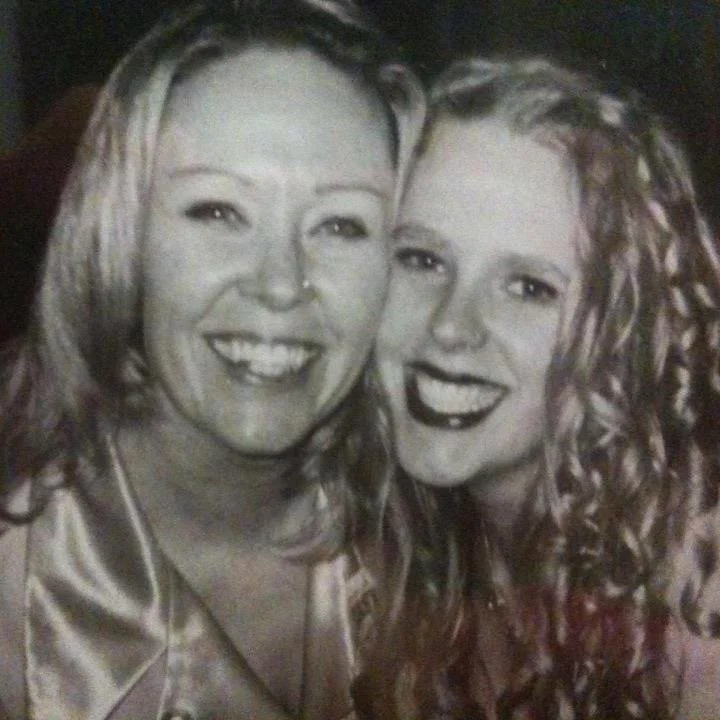
The most beautiful spiritual teacher I have had in my personal life was one of my closest friends, who died many years ago now. She was clairvoyant, and she had a quality I have rarely encountered since: she consistently reminded me to take what she offered with a grain of salt. She was human, she would say, and she could be wrong. She was sharing what she perceived and received, not delivering doctrine, and alongside that, she always turned me back toward myself. What do you sense, she would ask, what does your own inner knowing say about this. Her gift was never offered as a replacement for my own discernment; it was offered as a companion to it, and she would help me sort through the messaging that my own gifts were helping me tune into.
That quality is rarer than it should be.
There is a particular dynamic that forms when a spiritual teacher, consciously or not, positions themselves as the primary keeper of truth, when the implicit message becomes, “I have access to something you do not, and your path to clarity runs through me, for I am the one gifted with a direct line to the divine”. I have witnessed this dynamic produce real harm, not because the teachers in question were without a gift, but because unchecked authority in spiritual spaces does not stay neutral. It creates dependency where discernment should live, and over time, the student stops listening to herself because she has learned that the teacher’s perception is more reliable than her own.
The most significant harm a spiritual teacher can cause is the gradual erosion of a student’s trust in her own inner guidance, replaced by reliance on someone else’s. This is how I see abuse of power silently creep in.
Here is what I know to be true after nearly thirty years of working in this field: No one has access to the whole of spiritual truth. Not me. Not anyone.
The ascended masters, by definition, are no longer here in the way that we are, and the rest of us are students of life, regardless of how long we have been at it or how refined our perception has become. A practitioner with a genuine gift and experience has something real to offer people at varying times or touchpoints of their own spiritual journeys. What they don’t have is the entirety of the map, and any teacher who implies otherwise is asking you to outsource your inner knowing to them. That isn’t guidance, but it is fabricated codependence.
When a teacher places themselves beyond questioning, above humanity, above the ordinary vulnerability of not knowing, they remove the one thing that keeps the teaching relationship clean: the acknowledgment that you are both human beings moving through the same mystery, one of whom has more experience with a particular set of tools.
A good spiritual teacher, in my experience and in my own practice, is oriented toward one primary outcome: that you leave each interaction more attuned to your own guidance system than when you arrived. The work is to clear what has been interfering with your own inner signal, to help you hear yourself more cleanly, to support you in trusting what you already perceive. The teacher who is genuinely in service to your growth is working to make themselves less necessary, not more central.
I believe we’re in a collective reckoning with the older model and the gurufication of spiritual teachers who abuse their power. The era of the singular authority figure, the one who holds the answers and distributes them carefully, who positions their access to divine truth as the reason you need them, is giving way to teachers who can speak about their own humanity, their own ongoing learning and their own uncertainty, within the sphere of their deep expertise.

You as the Student
It is worth turning this mirror around, because the dynamic of misplaced authority doesn’t form on one side alone. A teacher can only hold that position if a student is willing, even if unconsciously, to hand it to them.
This is not a criticism or a blaming of those who have experienced spiritual abuse. My framing here is more from the standpoint of: pause and know what you’re saying yes to!
It is a deeply human experience when we are in pain, when something feels deeply off, and we cannot name it, when we have been carrying something for years without relief, to give in to the appeal of someone who seems to have clear answers and seems to really understand you. The desire to hand the weight to someone else, to defer to their knowledge rather than sit with the discomfort of our own uncertainty, comes from a genuine place. This deserves compassion, not judgment.
And it still warrants self-examination.
Consider how you move through your relationships with healers, clairvoyants, mentors, and coaches. When a session ends, do you leave with greater clarity about what you sense and what you want, or do you leave waiting to find out what they think you should do next?
When a decision faces you, do you reach for your own knowing first, or do you find yourself postponing until you can check with someone whose perception you trust more than your own?
Do you work with these people to strengthen your ability to hear yourself, or have you, over time, outsourced that hearing to them entirely?
These are honest and potentially challenging questions worth sitting with, not because seeking guidance is a sign of weakness; we do need teachers, but there is a meaningful difference between using a teacher’s perception to sharpen and elevate your own and using it as a substitute for developing one. The first builds something in you that remains after the session ends. The second keeps you returning not from growth, but from dependency. A practitioner who genuinely serves you will be working actively against that codependency.
I encourage you to seek out a teacher or practitioner who challenges you to trust yourself more, not less. Expect the work to leave you more capable of listening to your own inner guidance, not more reliant on theirs. If that is not what you are experiencing in a relationship with a healer or mentor, that is worth naming loudly and clearly.
What I offer is a precise and tested set of capacities, developed over decades, that can perceive and address things in the energetic field that most modalities don’t reach. I hold that with confidence. I also hold that I am still learning, still refining, still surprised by what this work continues to show me because I cannot possibly know everything. That is not a limitation; that is the honest condition of anyone doing deep work in a field as vast as this one.
Your discernment belongs to you. A good teacher knows that. The question is whether you do too.
